
Making Sense of the Grid: Long Lines, Local Lines, and the Interconnection Problem
Open up your favorite newspaper, and you’re likely to see a story about electricity. With customers and politicians voicing concerns about data center growth and rising energy bills, it’s hard to avoid talk of the grid. But long before this became a dinner table topic, energy analysts were writing about the need for increased transmission build-out in the US. Numerous papers, from national labs, the National Academies, and various academic teams called for increasing the capacity of our grid’s backbone. So where do we stand today on this electricity grid build-out, and how to make sense of the dizzying array of news articles on the topic?
You might read claims that transmission can lower electricity prices—but you might also read that transmission investments are partly what’s to blame for rising bills. How should one parse reports claiming that transmission line growth is anemic next to reports of large-scale investments being made? And what to make of some news stories’ suggestion that the current administration is blocking Biden-era initiatives to support grid build-out, while other reports instead suggest an administration that’s all-in on supporting grid investments?
I’d like to attempt here to lay out some basic principles that can help make sense of this complex web—the literal, physical web of connected lines crisscrossing our country, and also the complex web of narratives circulating about the state of US transmission today.
What purpose does transmission serve? Most obviously, it connects distant generation sources to the places where people live and work. In doing so, transmission brings multiple benefits. If demand is high today in one state and not in another, transmission allows trade in low-cost power across space. And since demand fluctuates across space and time, transmission can bring down costs for the country as a whole. It also improves reliability – if one power plant is inoperable because of a hurricane or a cold snap, other plants can fill in. And because it opens the power generation market up to more competition, it can reduce the possibility of market power, further bringing down costs.
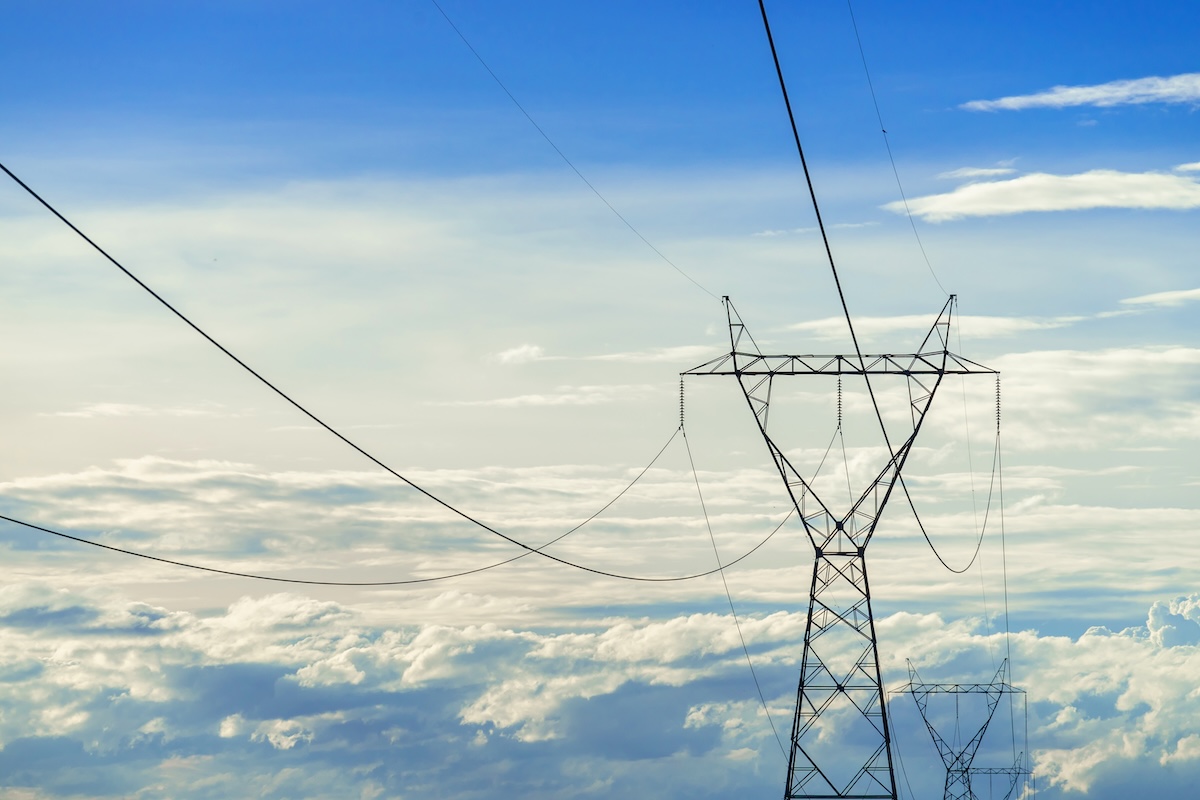
What kinds of projects support these goals? An oversimplification, useful for policy purposes, is to think about three different types of projects a transmission builder might carry out. Long-distance lines might be what you first pictured—big towers, connected by cables, perhaps next to the highway you took on your last summer vacation road trip. There are also short local lines in your city, and substations and transformers (stepping voltage up or down). The final type of project is an interconnection project, lines that do the important work of connecting something like a new solar facility or a new data center to the existing grid.
The policy problems these three projects face are quite different. When you read stories about slow growth, you’re probably reading about long-distance lines. Very few new long-distance, ‘interregional’ lines have been built in the US—you can count annual projects completed on one hand—despite the benefits they could bring in lowering generation costs and allowing for new solar and wind investments. I’ve written about one major barrier to building long-distance lines: incumbent power plant owners are frequently incentivized to block such projects, because they expose their power plants to competition. The potential net revenue changes are non-trivial: tens of millions of dollars annually for some power plants, adding up to hundreds of millions annually for some companies.
In contrast, when you read stories about major spending on new transmission (or distribution) investment (billions of dollars annually), you’re frequently reading about substations and local lines. This can serve the purpose of hardening the grid against storms, and of upgrading aging infrastructure. But the policy problems are quite distinct – in fact, multiple scholars have written about how utilities are incentivized to overbuild these kinds of lines, potentially contributing to unnecessary increases in residential bills. (The incentive comes from the guaranteed return that regulated utilities can earn on capital projects, but that’s a story for another blogpost.)
Last but certainly not least, there’s the so-called interconnection queue problem: new power sources being unable to connect to the grid because the wait is too long—on the order of five years (driven not necessarily by the NIMBYism you might be picturing, but rather the need to ensure that the grid is physically ready to handle the new power inflow). Similar concerns apply to new large-scale demand (like data centers).
So those competing newspaper claims might all be true at the same time: well-designed grid investments can lower electricity costs, but utilities might also overbuild some kinds of projects, burdening customers. Some projects are stalling, while others are moving forward, albeit not nearly at the pace that analysts have called for. And the administration is cancelling some projects while backing a few others with billions in loan guarantees.
Meeting multiple grid-related policy challenges is going to require more than one simple reform. It’s going to require careful attention to a thorny set of engineering, legal, regulatory, and market constraints—partly a legacy of how electricity markets and governance have evolved over decades, but also rapidly evolving as demand grows. Hundreds of billions of dollars are at stake, and it’s in all of our best interests to address this challenge head-on.